1. Project Background
In remote and infrastructure-limited environments, deploying reliable surveillance systems presents a dual challenge: ensuring stable network connectivity and providing continuous power supply.
Traditional grid-based solutions are often not feasible due to high installation costs or geographical constraints.
In this project, the client required a fully off-grid CCTV system capable of powering six IP cameras, each consuming approximately 25W, with no reliance on external electrical infrastructure.
The expectation was clear: a complete, pre-engineered, plug-and-play solution covering power generation, storage, and data transmission.
2. System Requirements
- Number of cameras: 6 units
- Power per camera: 25W
- Total camera load: 150W
- Continuous operation: 24/7
- Environment: Outdoor, remote location
- Power source: Solar (off-grid)
- Network: PoE-based IP surveillance
3. Solution Overview
To meet the client’s requirements, we designed an integrated solar-powered PoE surveillance system, combining energy generation, storage, and network distribution within a single outdoor cabinet.
The system includes:
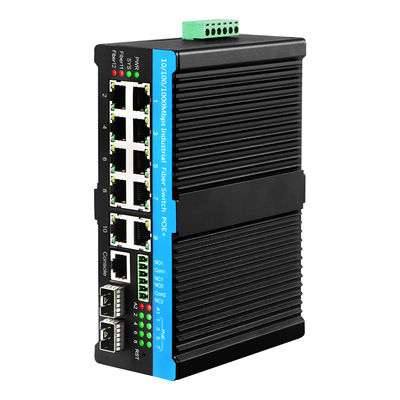
- Olycom Industrial PoE switch IM-FBP288GE (Edge networking device)
- Solar panel array (power generation)
- MPPT solar charge controller (energy regulation)
- LiFePO4 battery system (energy storage)
- Outdoor IP65 cabinet (system enclosure and protection)
4. System Design and Configuration
4.1 Power Consumption Analysis
The total system load was calculated as follows:
Cameras: 6 × 25W = 150W
PoE switch overhead: ~15W
Total system load: ~165W
This continuous load forms the basis for both battery sizing and solar panel design.
4.2 Energy Storage (Battery System)
To ensure uninterrupted operation during nighttime and low sunlight conditions, the system was designed with 1-day autonomy.
Daily energy consumption: 165W × 24h ≈ 3960Wh
Battery configuration: 48V 100Ah LiFePO4 battery (~4.8kWh usable capacity)
This configuration accounts for depth-of-discharge limits and ensures long battery lifespan (typically >4000 cycles).
4.3 Solar Power Generation
To sustain daily energy consumption, the solar array was sized based on average peak sunlight hours.
Required energy: ~4kWh/day
Peak sun hours: ~5 hours/day
Calculated solar capacity: ≈ 800W
Final design (with safety margin): 1kW solar panel system (e.g., 2 × 550W panels)
This ensures stable operation even under suboptimal weather conditions.
4.4 Power Management
A 48V / 40A MPPT (Maximum Power Point Tracking) solar charge controller was selected to:
- Maximize solar energy conversion efficiency
- Regulate battery charging
- Protect against overcharge and voltage fluctuations
4.5 Network Core: Power Booster PoE Switch
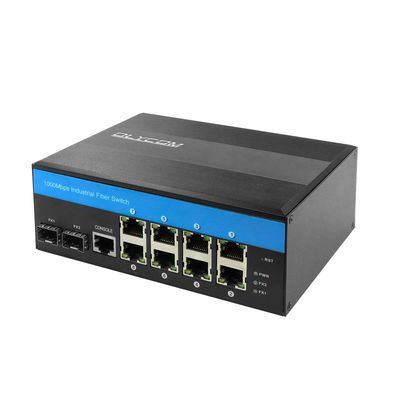
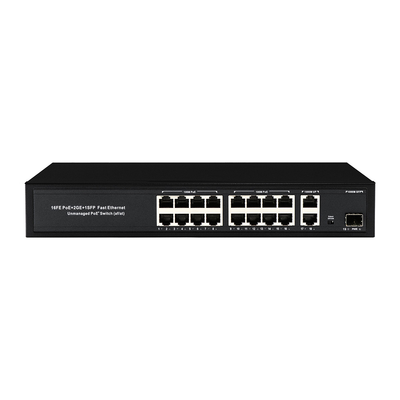
The system uses the IM-FP288BGE industrial PoE switch as the central networking and power distribution unit.

Key features:
- 8 PoE ports (supporting up to 6 cameras + expansion)
- 2 SFP uplink ports for fiber connectivity
- 48V boost PoE output
- Total PoE power budget: 240W
- Industrial-grade DIN design for outdoor cabinet deployment
This Ethernet switch enables both data transmission and power delivery through a single Ethernet cable, simplifying installation and reducing wiring complexity.
4.6 Cabinet Integration
All components are integrated into an outdoor IP65-rated cabinet, designed for durability and ease of deployment.
Internal layout:
Top section: MPPT controller and DC protection (breakers, surge protection)
Middle section: 8 Port PoE switch (IM-FP288BGE)
Bottom section: LiFePO4 battery
External interfaces:
Solar input
Camera/PoE outputs
Fiber uplink
Additional features:
Anti-corrosion steel enclosure
Ventilation or fan cooling system
Waterproof cable glands
Lockable door for security
5. System Architecture
The system operates as a closed-loop energy and data network:
Solar panels generate DC power
MPPT controller regulates and charges the battery
Battery supplies stable 48V DC power
PoE switch distributes power and data to cameras
Video data is transmitted via fiber uplink
This architecture ensures continuous operation, high efficiency, and minimal maintenance requirements.
6. Key Advantages
6.1: Fully Off-Grid Operation
No dependency on utility power, ideal for remote or temporary deployments.
6.2: Integrated Design
All components are pre-installed and optimized within a single cabinet.
6.3: High Reliability
Industrial-grade hardware ensures stable performance in harsh environments.
6.4: Scalability
Additional cameras or higher autonomy can be supported with modular upgrades.
6.5: Simplified Deployment
Plug-and-play system minimizes on-site engineering and installation time.
7. Conclusion
This project demonstrates how a well-designed solar-powered PoE surveillance system can effectively solve the challenges of remote monitoring.
By combining energy generation, storage, and network infrastructure into a unified solution, the system delivers:
- Reliable 24/7 surveillance
- Reduced installation complexity
- Long-term operational efficiency
Such solutions are increasingly valuable in applications such as:
- Remote security monitoring
- Construction sites
- Oil & gas fields
- Rural infrastructure projects
This case highlights the transition from standalone hardware supply to complete system integration, enabling higher value delivery and stronger customer engagement.
If required, the system can be further customized to support extended autonomy, higher camera counts, or hybrid power inputs, depending on project-specific needs.
Please contact us for more information.


 Ваше сообщение должно содержать от 20 до 3000 символов!